Product Engineering Processes
Fall 2015
The Product
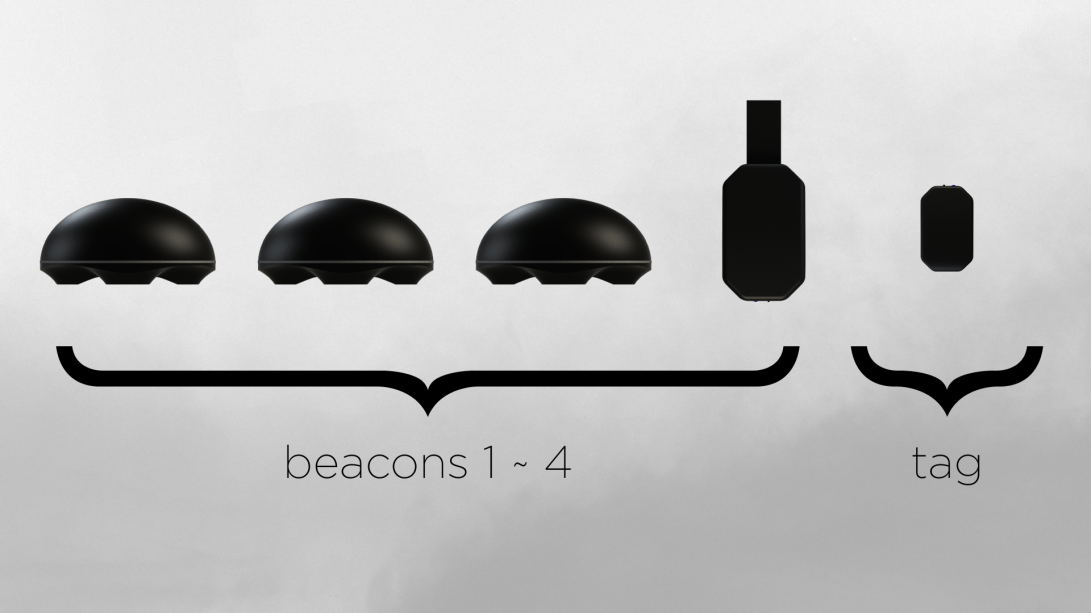
The system includes 4 beacons, 3 to secure around the venue and 1 to attach to the spotlight, and a small tag, which is worn by the performer being tracked. The UWB technology operates on a frequency that does not overlap with other common frequencies that could cause interference. In a venue filled with wireless electronics, such as cell phones and mic packs, this is essential.
The Process


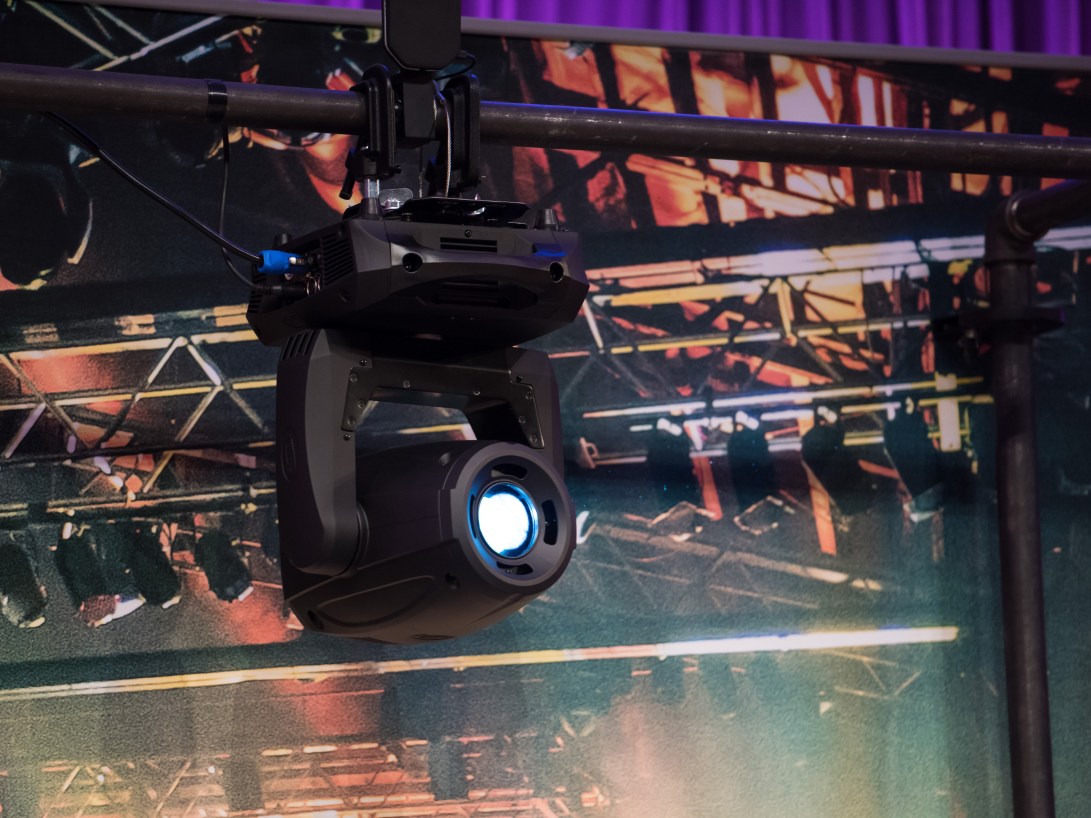
The initial idea for Orion was to create an entire spotlight assembly, including the pan/tilt mechanisms. I worked on the internal layout and outer casing of the spotlight gimbal. After testing, we realized a far simpler option would be to interface with a DMX spotlight that had pan/tilt functionalities built in, allowing us to focus on the tracking technology. These initial tests, using a laser pointer as a stand-in spotlight, validated that our system could track a tag moving across a room.
For the final implementation, my focus was on the housing of the different components. I worked on designing the small tag and on assembling and finishing the 3D printed prototypes.


The Context
This product was developed by a team of 20 MIT undergraduates for 2.009, a senior capstone class. Starting from the theme of “magic”, we spent three months working through different product concepts, eventually converging on one idea to develop further. The alpha prototype of Orion was presented at a product launch to a live audience of over 1,000 practicing product designers, academics, classmates, and guests, and a webcast audience of over 10,000.
 Laura Standley